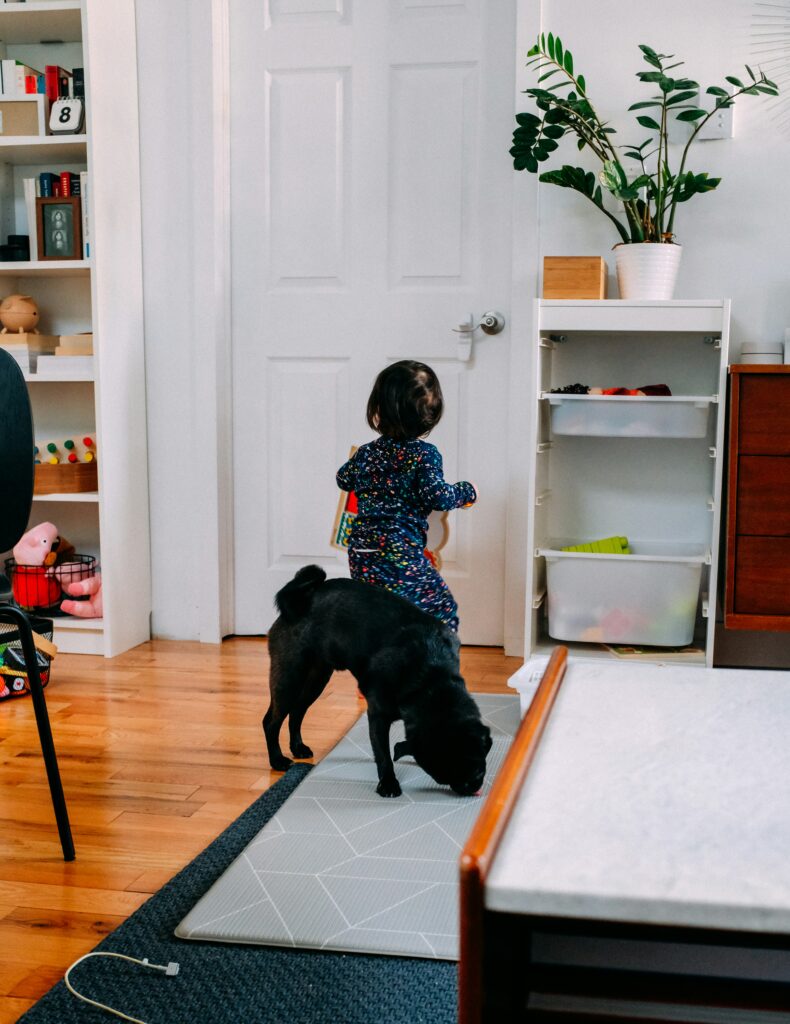
A baby gate can be useful for more than child safety. In many homes, the same gate also helps manage pets, separate rooms, protect stair areas, and create safer spaces for both toddlers and animals. If you have a young child and a dog, cat, or other pet at home, choosing the right gate needs a little extra thought.
A gate that works well for a crawling baby may not be strong enough for a large dog. A gate that keeps a pet away from one room may not be suitable for the top of stairs. A gate with a small pet door may be convenient for cats, but it may not be safe if a toddler can crawl through it or open it.
The best baby gate for homes with toddlers and pets should be secure, easy for adults to use, difficult for children to open, and strong enough for everyday family life. It should also fit the space correctly without leaving gaps or creating trip hazards.
Why Homes with Toddlers and Pets Need Extra Planning
Toddlers and pets move differently. A toddler may pull, shake, lean, climb, or try to open a gate. A dog may jump, push, scratch, or press against it. A cat may climb over it or squeeze through small gaps. Because of this, the gate needs to match both your child’s stage and your pet’s behavior.
For example, a small dog may only need a low barrier in a hallway, but that same gate may be too short for a toddler who is learning to climb. A large dog may require a taller and stronger gate with a secure frame. If the gate is used near stairs, the installation must be even more careful.
The aim is to choose a gate that creates a clear boundary without making daily movement difficult for adults.
Choose the Right Height
Height is one of the most important features when choosing a gate for toddlers and pets. A standard baby gate may work for younger babies, but older toddlers and larger pets may need a taller option.
If your toddler is active or tries to climb, a taller safety gate may reduce the chance of climbing over. If you have a medium or large dog, height also matters because some dogs can jump over shorter gates.
When choosing height, also look at the design. Gates with horizontal bars may be easier for children to use as footholds. Vertical bar designs can be better because they reduce climbing opportunities. Mesh or panel-style gates may also work depending on the location and product quality.
Check the Strength of the Frame
Homes with pets need a gate with a strong frame. A lightweight gate may move or flex if a dog pushes against it. Over time, this can loosen the installation or damage the gate.
Metal gates are often a good choice for strength and durability. Wooden gates can look attractive and work well in some homes, but they should still be sturdy and well-built. Mesh or retractable gates can be convenient for certain spaces, but they may not be the best choice for strong dogs or high-pressure areas.
If your pet is large or energetic, choose a gate designed for both child and pet use. Check the product details carefully to see whether it is suitable for pets, stairs, wide openings, or heavy daily use.
Use Hardware-Mounted Gates for Stairs
If the gate is being used at the top of stairs, a hardware-mounted gate is usually the safer choice. This type of gate is fixed into the wall, banister, or mounting surface with screws and brackets. It is more stable than a gate that relies only on pressure.
This is especially important in a home with pets because a dog may lean or push against the gate. A pressure-mounted gate may shift if enough force is applied, which is not ideal near stair edges.
At the bottom of stairs, some families may use a pressure-mounted gate, but the layout should still be checked carefully. If the gate has a bottom bar, it can create a trip hazard. For busy stair areas, a hardware-mounted gate may still be the better option.
Be Careful with Pet Doors
Some baby gates include a small pet door. This can be useful if you want a cat or small dog to move between rooms while keeping a toddler out. However, this feature must be chosen carefully.
A pet door may not be suitable if your child can crawl through it, reach through it, or learn how to open it. Some pet doors are too large for homes with curious toddlers. Others have latches that may not be secure enough.
Before choosing a gate with a pet door, check the size, latch design, and placement. If there is any chance your child could use it unsafely, choose a standard gate without a pet opening.
Think About Room Separation
Baby gates can help separate toddlers from pet feeding areas, litter boxes, dog beds, water bowls, and rooms where pets need quiet time. This can make the home safer and more comfortable for everyone.
For example, you may place a gate at the kitchen entrance to keep a toddler away from pet food and water bowls. You may use a gate near a laundry room if a litter tray is kept there. You may also create a pet-only space where a dog or cat can rest without being disturbed.
This kind of separation can reduce stress for pets and prevent toddlers from touching food bowls, toys, or bedding.
Choose a Secure Latch
The latch should be easy for adults but difficult for toddlers. Some toddlers quickly learn how to open simple gates, especially if they watch adults use them often.
Look for a gate with a child-resistant latch, one-handed adult opening, and secure closing system. Auto-close features can be helpful in busy homes because gates are sometimes left open by mistake.
If you have pets, make sure the latch cannot be opened by jumping, pawing, or pushing. A strong latch is especially important for larger dogs.
Consider the Width of the Opening
Homes with pets often use gates in wider spaces such as living rooms, kitchens, hallways, and open-plan areas. Standard baby gates may not fit these openings. You may need an extra-wide, extendable, or configurable gate.
Measure the opening carefully before buying. Check whether the gate includes extensions or whether they must be purchased separately. The gate should fit within the official width range and should not rely on unsafe homemade adjustments.
For very wide spaces, a configurable gate with multiple panels may work better than a standard doorway gate.
Avoid Trip Hazards in Busy Areas
Some pressure-mounted gates have a bottom bar. This may not be a big issue in a doorway, but it can become a trip hazard in busy areas or near stairs.
In homes with toddlers and pets, adults may often step over toys, carry laundry, hold a child, or move quickly between rooms. A bottom bar can increase the chance of tripping.
For high-traffic areas, choose a gate with a walk-through door and a design that is easy to use. At the top of stairs, avoid gates with a bottom threshold whenever possible.
Check for Gaps
Gaps around the gate can be a problem for both children and pets. A toddler may reach through or try to squeeze near the edge. A small pet may crawl underneath or between the bars.
After installation, check the sides, bottom, and latch area. The gate should not leave large spaces. If there are gaps, the gate may be the wrong size or may need proper extension parts.
Do not use loose materials to fill gaps. Choose a gate that fits correctly.
Match the Gate to Your Pet’s Behavior
Different pets need different gate setups. A calm older dog may not put much pressure on a gate. A young energetic dog may jump, chew, or push. A cat may climb over almost any low gate. A small dog may squeeze through bars if they are too wide.
Think honestly about your pet’s behavior before choosing a gate. If your pet is strong or active, choose a taller and stronger model. If your pet chews, avoid materials that can be easily damaged. If your cat needs access to certain rooms, consider whether a pet door is safe for your child’s age.
Final Thoughts
Baby gates can be very helpful in homes with toddlers and pets, but the right choice depends on more than size alone. You need to consider height, strength, latch safety, mounting method, gaps, stair placement, pet behavior, and daily use.
For stairs, a hardware-mounted gate is usually the better option. For hallways, kitchens, and room separation, pressure-mounted or extra-wide gates may work depending on the layout. If choosing a gate with a pet door, make sure it is safe for your toddler and not easy to misuse.
A good baby gate should create safer boundaries without making your home difficult to use. With the right setup, you can protect stair areas, manage pets, and create a more comfortable space for the whole family.